
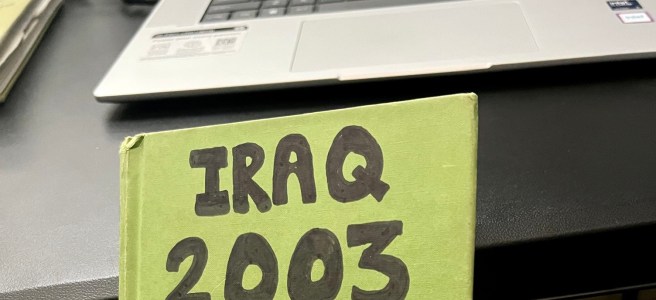
Damn, it’s hotter than two rats wrestling inside a wool sock next to the fireplace out here! I can barely concentrate on the intensity of combat with the sunburn I’ve got on the backs of my hands. It feels like they’re being held inside a 400-degree oven. I misplaced my flight gloves earlier–the ones my unit wears—and lost my sun protection while rolling around the Iraqi desert. Between the relentless sun and the wild dogs barking 24 hours a day, this place is downright miserable.
We get word that something big is happening. We have a “big mission” briefing scheduled for 1600. My unit usually provides a lot of intel, and it is clear this mission is going to be significant. SEAL Team 3 is with us, eager to get to work, as my unit has handled most of the action up to this point.
After sitting through all the brass I could take for one day, it is official: my unit is part of the mission to rescue her. Our job? Provide the “diversion.” Delta and others will conduct the actual rescue.
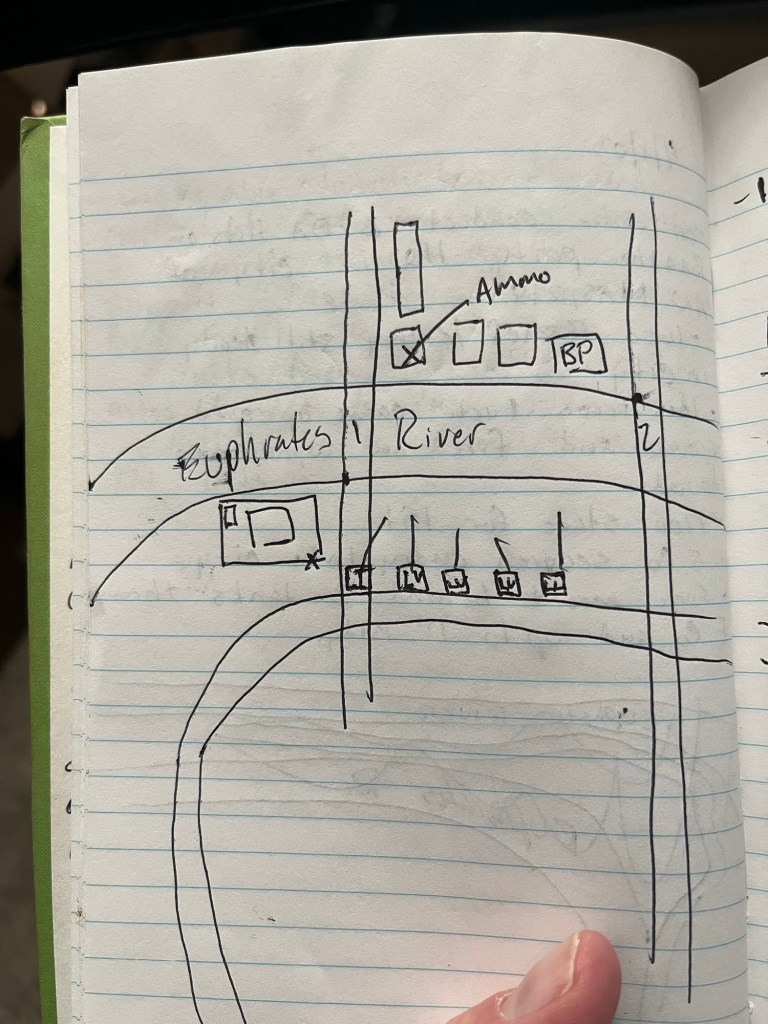
We’ve been moving from one hit to the next since I entered Iraq. And my unit, like the rest of America, is keenly aware that the enemy has taken several female prisoners of war. Our part in the mission is to kick off after a massive 1,000-pound bomb gets dropped on a house just inside the city limits of An Nasiriyah, where we were located. What I can’t understand is why we’re waiting several hours to conduct the raid if she’s just down the street at a hospital.
By the time we begin, it’s dark and eerily quiet—quieter than usual. I haven’t heard a wild dog bark in hours. My platoon starts moving on foot from our building, patrolling slowly but deliberately toward a bridge that will take us across the river and closer to her. Our mission is simple: create chaos. We are to be as loud and destructive as possible to draw enemy attention away from the hospital where she’s being held.
As we move through the night, we pass an old house that looks like something out of a horror movie. One of my teammates must’ve seen something. He fires a round of 5.56 full metal jacket through the front window. Nobody else fires, but that one shot is enough to jolt the unit into action. Just past the house, we hunker down behind a small brick wall about three feet high right next to the bridge we need to cross. It’s silent. Dead silent.
And then. I can’t hear or see anything, but suddenly, I feel my chest start to cave in. It’s like the air has been sucked out of me. That’s when it hits me: they confused the north side of the river with the south and dropped the bomb on the wrong side—our side.
What follows is chaos. The explosion is like something out of a movie. The earth moves, and the blast sends me headfirst through the brick wall. I’m dazed, concussed, and confused, but my responsibilities don’t change. I move forward. The air fills with the sounds of mortars and small-arms fire in the distance. We cross the heavily damaged bridge, carefully stepping over holes that reveal the river below.
Once across, we turn west and began clearing houses. Surprisingly, there isn’t much resistance. We move from house to house. One backyard catches our attention. A wounded cow stands there, riddled with shrapnel wounds. It lets out a few mournful moos as we debate whether to put it down or leave it. We let it roll the dice.
At one corner house, we encounter the owner. He adamantly refuses to let us enter. Our platoon sergeant quickly explains to him that we’re entering to confirm he isn’t aiding the enemy. As the breacher in my platoon, I carry a sledgehammer strapped to my back in a makeshift PVC pipe holder. The owner isn’t happy as I use it to force entry into about 10 locked rooms. It doesn’t take long to figure out why we aren’t welcome—he is storing 4,000 enemy .50 caliber rounds. The owner is detained and taken for interrogation.
We continue making noise, clearing houses, and ensuring the enemy’s attention stays on us. We return to our compound for the night. I sleep better than I have in weeks.
The next morning, leadership informs us that she has been rescued with minimal resistance and is recovering in Germany. At the time, none of us realizes the significance of the mission we were just part of.
It isn’t until I return to the United States that it truly hits me: Jessica Lynch is the first female American POW ever successfully rescued from enemy combatants. I’m certain anyone involved in that mission would say it went off without a hitch. Missions like that—forceful, overwhelming, and precise—were what allowed us to prevail time and time again.
-Travis

 Things Men Carry